
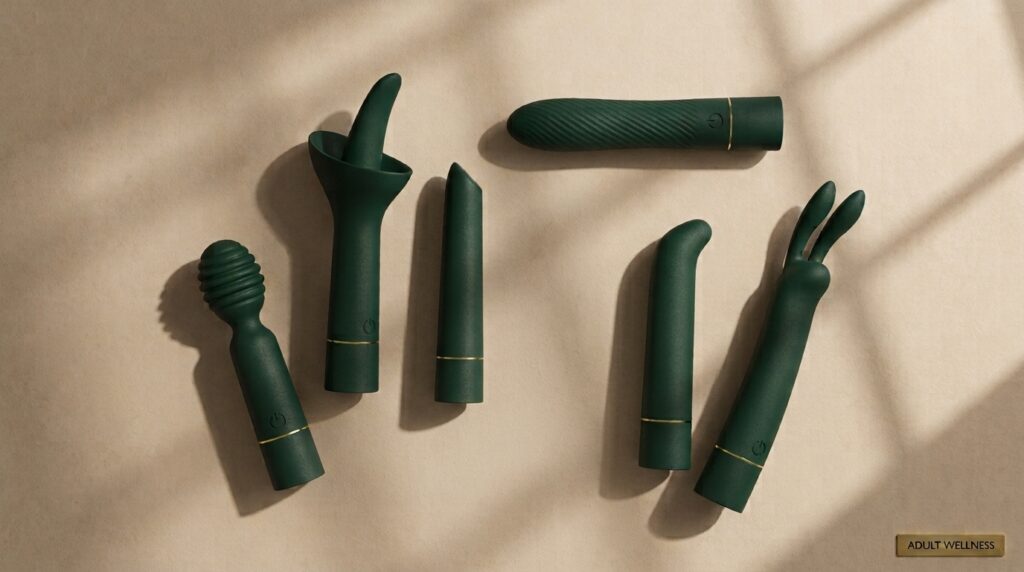
For years, the playbook for manufacturing personal wellness hardware was straightforward: higher RPMs, stronger motor specs, longer battery life, and waterproof ratings.
While these baseline metrics remain crucial, they no longer win markets.
If you look at the fastest-growing intimate wellness brands today, finding a reliable sexual wellness device OEM/ODM manufacturer is key to turning design concepts into high-marketability reality…
This shift from mechanical performance to emotional resonance presents a fascinating paradox for hardware engineering. How do you engineer an experience that is supposed to feel entirely emotional using purely physical, mechanical components?
Here is what we are seeing on the manufacturing frontlines as brands make this transition:
1. The End of “Noise as a Compromise”
In the past, powerful vibration often came with a trade-off: mechanical hum and operational noise. Today, emotional wellness requires absolute tranquility. If a device’s acoustic signature breaks the mood, the product fails—no matter how powerful the motor is. Achieving whisper-quiet operation and eliminating high-frequency resonance requires advanced dampening structures, meticulous motor balancing, and custom housing isolation that standard off-the-shelf components simply cannot deliver.
2. Tactile Psychology: Why Texture is an Interface
When a user seeks stress relief or self-reconciliation, the physical touchpoint is the first line of communication. A rough parting line on a silicone mold, uneven surface matte coating, or slight chemical odor immediately shatters the illusion of luxury and safety. Advanced liquid silicone rubber (LSR) processing and post-cure treatments are no longer just manufacturing steps; they are the core determinants of psychological trust between the user and the brand.
3. Reliability as a Form of Empathy
True intimacy cannot exist with anxiety. If a device fails mid-session, loses connection, or suffers from battery degradation, it breaks psychological safety. For hardware engineers, empathy translates into rigorous 100% PCBA testing, strict battery management systems, and flawless sealing to ensure absolute dependability.
The Takeaway for Product Leaders
Consumers don’t buy “motors and silicone.” They buy the feeling of safety, relaxation, and intimate connection that your device enables.
As a manufacturer, our job isn’t just to assemble parts based on a CAD drawing. It is to protect the brand’s emotional promise through uncompromised, invisible engineering.
What are your thoughts on this shift? Are you seeing your product roadmap lean more toward functional specs or user experience design? Let’s discuss in the comments.
As a specialized custom silicone intimate product factory, Kaiwei provides end-to-end turnkey manufacturing.
Looking for a Reliable OEM/ODM Partner?
Contact our engineering team to bring your custom silicone wellness device to market.